He was a young man, caught in the web of drug addiction. She was the
pharmacist who with genuine love and care dispensed the daily dose of
Methadone to people yearning to break free from the effects of drugs. He
shared with her his desire to re-order his life, to become free of the
paralysing effects of addiction. His spoke of his hope for a new
beginning. Suddenly he stopped coming. She wondered about him. Where
was he? She watched and waited but he never returned.
Years passed. One day her son invited a friend home for an evening meal.
When she opened the door, standing before her was the young man of
earlier years. Healthy and well, he now worked as a social worker with
others caught in the grip of addiction. He shared how her words, like
an arrow, had struck his heart, opening him to reform, freedom and hope.
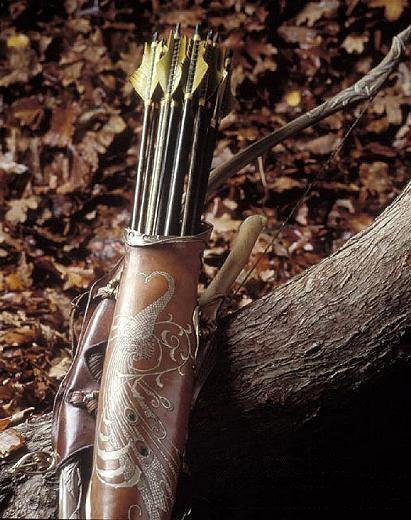
John the Baptist, the arrow in God’s quiver, waited in the wilderness.
At the appointed time he was sprung forth from God’s bow. John pointed a
people who lived in dread and uncertainty to a greater power and a
greater love revealed in the person of Jesus.
Can you find yourself among the many people who went out to meet and welcome John’s message? What might John say to you?
In what way this week might you become the arrow in God’s hand, the
messenger calling people to hope and love and to the reform of social
injustices?
Taken from the marvellous and inspiring Sacred Space site
Wednesday, 7 December 2011
Tuesday, 6 December 2011
Monday, 5 December 2011
Advent day 9: Bethlehemian Rhapsody
This is doing the rounds on Facebook and Twitter and I thought I would share it here... Enjoy!
Sunday, 4 December 2011
Advent day 8: The Gospel According to L'Oreal
We live in an immediate world - instant food, instant info available on the internet, instant winners with our lottery mentality. What we want, we want now and we are not prepared to wait for it. We are encouraged to live for ourselves, to live in the now, to live as if no-one else mattered - and we reinforce this mentality when we begin to take seriously advertising stap lines that say things like ‘Because you’re worth it!’
Yet for most of us right at the moment, very little, in reality, is instant. We may not instantly get a pay rise, we may not instantly get a job, we may not instantly be able to afford the new TV or foreign holiday, the bank may not instantly extend our overdraft. Yet we expect our, our nation’s and our world’s ills to be sorted out in the blink of an eye - and we don’t like it much when they seemingly can’t be, because you’re worth it! You and I deserve so much more, so much better. Don’t we. Don’t we?
This morning’s Gospel reading comes from Mark’s Gospel. It’s a very 21st century account of Jesus’ life - it’s short and instant. It doesn’t faff around with stories of angels, babies, shepherds and visiting wise men. It cuts straight to the chase. Mark, almost understanding our need for instant answers even tells us that what he’s about to write is about Jesus, whom he names right at the beginning as the Messiah, the Son of God. This is no slow burning page turner. Mark has shown us the last page of the book right at the beginning - Jesus is God’s chosen one come to transform us and our world.
Then bam! Immediately we are flung into the wilderness with this odd man John the Baptist calling people to repent through baptism. To change their lives, before the coming of another person. We know that this other person is Jesus, who’s coming we are in the midst of preparing for and at this time of year we are in the midst of (frenetically) readying our homes and our lives for Christmas.
John called people then, and us this Advent, to repentance. Repentance is so much more than being really really sorry. It involves imagining something you regret and imagining it as an object in the middle of the road and you are walking towards it. Repentance is acknowledging that it’s there, and then walking away from it, resolving never to go there again. In our immediate world, this is hard as it’s something we cannot rush mostly because it is something we probably want to avoid it altogether. We do not like change. Certainly not this sort of change. It is much easier to make excuses and continue on business as usual. It takes time and courage to even realise that things could and should be better. This morning, this Advent, John encourages us to change our lives in readiness for the coming of Christ, because it is only He who can change our hearts by the power of His Holy Spirit. Repentance is not walking away in failure thinking we cannot do it. Repentance is profoundly hopeful - it is about acknowledging that where we cannot and when we cannot change, God can.
My experience is though, if you scratch beneath the surface, all of us do want change. We want better homes, lives, cars, jobs, livelihoods, better fitness, better looks, a better world in which to live, better politics, better hospitals, better schools, better relationships with our family and friends and so on - and we want it now. Peace in nations begins with peace in people. Free nations begins with free people. Liberation of lands and political systems begins with liberating the human heart, and all of that can only come in time, in God’s time.
John met people in the wilderness - not a desert but a place with few resources, but a place where people had to rely on God, where they met him, often powerfully. In the 4th Century there were many Christians who withdrew to the wilderness to find God. Some of them became wise leaders and were referred to as “Abba”. One such Abba lived high in the mountains and a young man wished to be taught by him and so set off early to find the Abba. He climbed for hours to reach the cave in the mountain and when he arrived he found the cave with few possessions, but amongst them were a water jug and bowl. The Abba didn’t acknowledge him but was silent in prayer so the young man sat down and waited. One hour passed, and then another and then another. He became frustrated and worried that he would have to return home soon before it became dark, so he said “Abba, are you not going to teach me anything?” The Abba arose and poured water from the jug into the bowl and said “What do you see?” The young man looked into the bowl and replied “I see dirty water”. The Abba fell silent again for another hour and then repeated the question “What do you see?” The young man looked into the bowl again and replied “I see my face.”
We can’t do anything about answering John’s call to repentance until we see ourselves as we really are, until we realise that we need God to make us to be the people He and we long to be, deep down. In doing that, we open ourselves up to the one who is to come, the one whom John didn’t feel worthy to be even in the presence of, the one by whose Holy Spirt even our hearts can be changed - Jesus - who can transform us from the inside out - because He believes we’re worth it. Amen.
h/t to Lesley for some pointers and hints in this sermon....
Labels:
Advent day 8,
John the Baptist,
repentance
Saturday, 3 December 2011
Advent day 7 - The word as a wordle for Advent II
Tomorrow's Gospel reading from Mark 1:1-8 as a word cloud...
The beginning of the good news about Jesus the Messiah, the Son of God, 2 as it is written in Isaiah the prophet:
“I will send my messenger ahead of you,
who will prepare your way”—
3 “a voice of one calling in the wilderness,
‘Prepare the way for the Lord,
make straight paths for him.’”
who will prepare your way”—
3 “a voice of one calling in the wilderness,
‘Prepare the way for the Lord,
make straight paths for him.’”
4 And so John the Baptist appeared in the wilderness, preaching a
baptism of repentance for the forgiveness of sins. 5 The whole Judean
countryside and all the people of Jerusalem went out to him. Confessing
their sins, they were baptized by him in the Jordan River. 6 John wore
clothing made of camel’s hair, with a leather belt around his waist, and
he ate locusts and wild honey. 7 And this was his message: “After me
comes the one more powerful than I, the straps of whose sandals I am not
worthy to stoop down and untie. 8 I baptize you with water, but he will
baptize you with the Holy Spirit.”
The key to the good news about Jesus the Messaiah the Son of God, begins with recognising that we are not the centre of the universe, that we are not all that matters. As we stumble through the spiritual and emotional wilderness that our lives so often are, we are confronted, by God, with our deepest longings - to be made new, to be better people.
Advent is not self-help in spiritual clothing. Advent is about us getting our house in order as far as we are each able, but God doing the rest.
Labels:
Advent day 7,
John the Baptist,
word,
word cloud,
wordle
Friday, 2 December 2011
Advent day 6: Advent begins where we are...
I pinched this post off the marvellous Visual Theology blog - thank you Dave Perry, your photos paint words and your words fire imaginations...
The Polish sculptor Igor Mitoraj takes the idioms of classical
Graeco-Roman sculpture and gives them a thoroughly postmodern twist by
emphasising the fragile, damaged nature of our humanity as opposed to
its idealised perfection. As such his representations invite
self-recognition, acceptance and empathy in the mind of the viewer.
Mitoraj's imperfect marble figures draw us into an awareness of the
solidarity of our collective brokenness as individuals. His magnificent
Héros de Lumière (Hero of Light), currently on display at the Yorkshire
Sculpture Park, exemplifies this artistic trait to the full.
It is therefore a perfect image with which to begin Advent. It is into this sorry state, this brutal reality, this damaged, broken and fractured sense of self and of the other that our Advent promises speak. Because it is from this place of abject truth that the Advent journey has to begin. Not from some errant and skewed sense of perfection, or from an idealised image of who we are, as individuals, societies or nations. Hero of Light depicts neither fantasy nor illusion, rather it says here is where you are. It is only from here that you can journey to Bethlehem. Depart from anywhere else and your travelling will be in vain; a futile exercise in vanity.
The biblical texts could not be clearer on this point: "The voice of one crying out in the wilderness" (Mark 1:3) and "A voice cries out: 'In the wilderness prepare the way of the Lord'" (Isaiah 40:3) both direct us to the startpoint of our Advent pilgrimage. The wilderness and wildness of the human condition in all its fragile, imperfect beauty is where love speaks to us by name. And as God's beloved we are invited to make the promises our own; to take them to heart and believe them. Like this, as this, nothing less than this; from this sacred place of grace we set out again, or maybe for the first time, to discover Christ, the light of the world.
Labels:
Advent,
Christ,
Dave Perry,
light,
pilgrimage,
Visual Theology blog
Subscribe to:
Posts (Atom)