Showing posts with label hope. Show all posts

Saturday, 1 December 2012

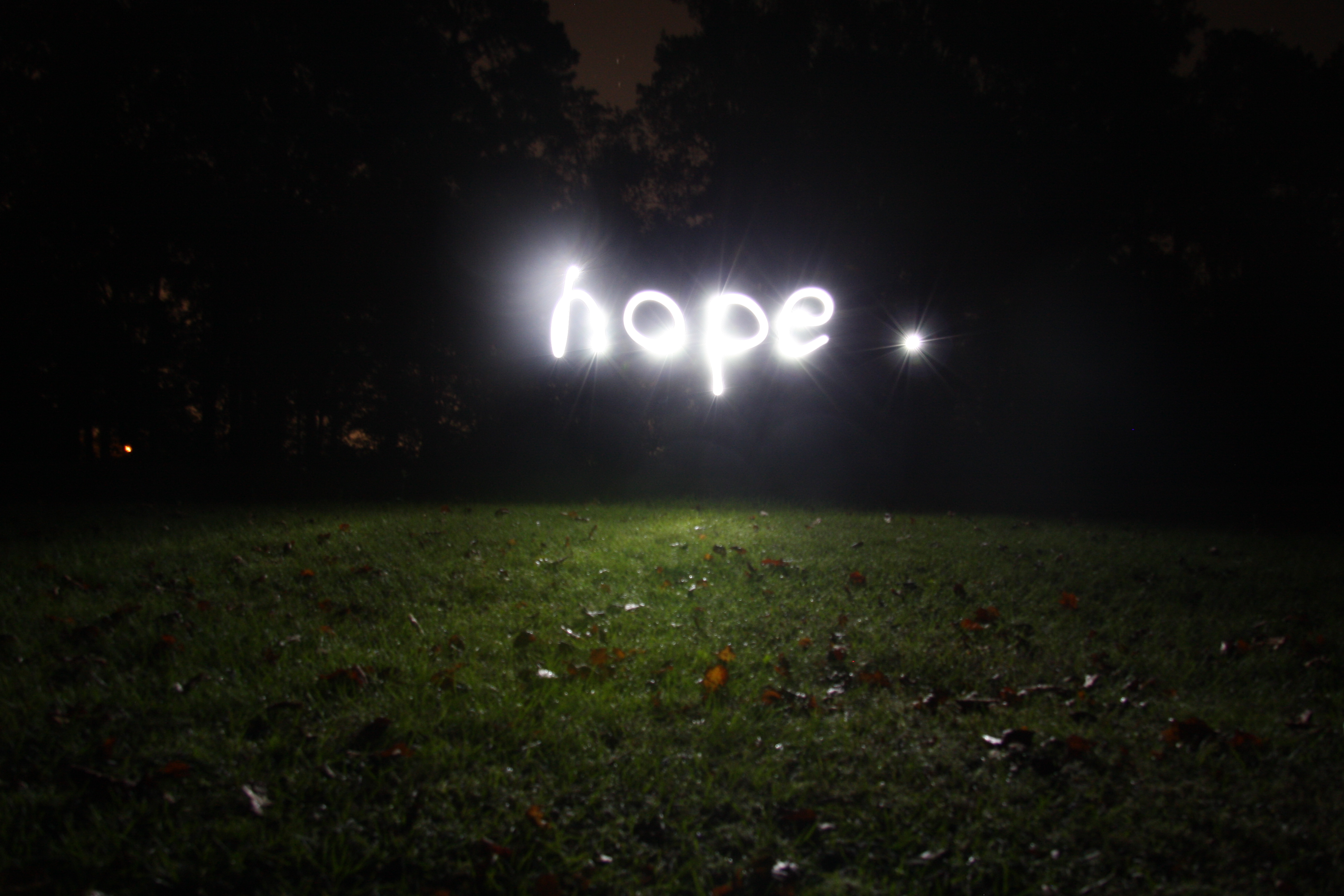
Hope - like light in the darkness

This week the Leveson report was finally published - 2000 pages long, so big it has to be carried in it’s own box.The inquiry’s origins lie in the public’s utter revulsion that the phone of a murdered teenager was hacked for information by someone acting for a section of the British press and their sole aim was - with ever increasing sensationalist stories - to sell more papers. This led to the seventh inquiry in less than seventy years which has dealt with concerns about the press and it carried the personal authority of the Prime Minister.

Lord Leveson’s inquiry has left no stone unturned into the culture and practices of the press and has exposed endemic failings, unacceptable practices and and deeply unhealthy relationships especially with the police and other media empires.

Many significant and robust recommendations have been made by Lord Leveson. Many people agreeing that they are needed to atrophy the all encompassing power of the press. And yet after months of investigation and hundreds of witnesses, some would argue that it has all been brought to nought by parliament being unable to agree on the need to implament the key recommendations.

And the gut-wrenching massacres in Syria and Gaza continue... and the world has largely stood by, sucking it’s teeth and shaking it’s head. All too quick to act to bring about peace in Afghanistan or Iraq and yet unable or, worse still, unwilling to bring an end to the hopelessness that fills make shift refugee camps and appartment blocks.

Place that alongside another round of failed UN led talks in Doha to seek to slow the global affects of climate change, and the increasing hardship that many in the UK and across the world are feeling due to a continuing recession that slowly but surely is grinding many into deeper and deeper debt and unemployment, and a bleakness settles like new fallen snow.

I am sure that I speak for all of us when I say that throughout my life, I have had longing that things on the world stage as well as things local and personal would be better by now. God knows we pray that it would be. And yet, as we we edge ever nearer another season of goodwill, it feels like we no nearer that utopian goal. The things that I hope might have been resolved have been replaced by other seemingly unsolvable issues.

The people of Israel, at the time that God spoke through Jeremiah, understood hopelessness on a far grander scale. In 587 BC Assyria attacked the nation of Israel, burned Jerusalem, destroyed the temple, and carried off its people into slavery. Their situation puts ours into stark contrast doesn’t it? In those years of exile the people of God quite rightly asked God again and again ‘why?, Why are we in this situation? Why did you allow it God?’

It is into this sense of devestating defeat and discouragement, this longing for God to right things, that these words from Jeremiah come. In that context, they feel like naive words indeed. Yet it is all to easy to ‘grin and bear it’, because it takes real courage to stand up, to make your voice heard, to swim against the flow, and to complain.

But Jeremiah goes one step further. In the midst of their sense of gut-wrenching hopelessness, Jeremiah along with the prophet Isaiah, proclaim a different vision based on a renewed trust in God. "Your God reigns!" All of those grand phrases that are so well celebrated in Handel’s Messiah "Comfort, ye, my people," "And he shall reign forever and ever" came out of exile. "The days are surely coming, says the Lord, when I will fulfill the promise I made to the house of Israel and the house of Judah... In those days Judah will be saved and Jerusalem will live in safety" says Jeremiah. The time is coming! I will restore, re-gather Israel and Judah, do for you that which you cannot do for yourselves, namely, bring you home.

Pushy, risky theological claim that, all present evidence to the contrary, God still reigns and God's purposes shall not be finally defeated. It takes a lot of faith to express confident joy in the reign of God and at the same time honesty about the situation. Israel's prophets managed to pull it off.

But...  The nation never returned to their homeland as a whole. The restoring vision that God shared through the prophets was true for only a handful, a remnant of the the people ever made it back... But look again at what God says through Jeremiah as that’s not what he promised - a future time is coming, when I shall not only restore things to the way they were, but also do a new thing - a righteous branch shall spring up for David. A new spring shoot will begin to grow from the long dead tree that is the historical line of King David. When that time comes says God - things will not only restored to the way they were but the lasting the peace and security that you long for will come. Hope will shine out like blinding light in the middle of the deepest darkest night.

Advent is a time when Christians are invited into exile. It is a time when the church calls us to live differently. To slow down. To refocus our priorities. To step away from the madness that is the innevitable rush to Christmas and to stop and look at the world and our lives and the mess that they often really are. But instead of being stilled into inactivity through a crippling hopelessness and despair that thing have ever been thus and will not change. Instead we should live as exiles - refocussing our lives and hopes on God, knowing that it is only He who can bring the transformation we long for.

Advent calls us to look for the searing bright light of the hope of God.  Jeremiah reminds us that that things in our world and in our lives will not only be restored, but that God will do a new thing in us and amongst us personally and globally. Advent must be time to cry to God about the injustice of war, of debt, of a climate change, but also to expect, with sure hope, that God will bring a new spring shoot of faithfulness to grow in us. So that through us our world and our lives together can be transformed. Friends I still hope that the world would be a better place and that my life would be in better shape - in Advent God reminds me that it will be. That’s not wild hope. That’s Advent hope.

Wednesday, 30 November 2011

30th November (Feast of St Andrew) - Advent day 4

 A shot of Alter Bridge on stage last night at Wembly Arena.
'...On this day I see clearly everything has come to life
A bitter place and a broken dream
And we'll leave it all behind.

On this day its so real to me
Everything has come to life
Another chance to chase a dream
Another chance to feel
Chance to feel alive...'


The lyrics above are from the Alter Bridge's song 'Metalingus.' Members of the band have been influenced by the teaching of Jesus over the years and, for me at least, this song sums up God's longing and ours made present, raw and real in this season of Advent...

It may not be your cup of tea but it is mine, and here's a live version...


Tuesday, 29 November 2011

November 29th - Advent day 3

I was re-reading an interview in the New York Times by Arthur Lubow with the Estonian composer Arvo Pärt. It got me thinking...

'...Emigrating from the Soviet Union to the West in January 1980 with his wife, Nora, and their two small sons, the Estonian composer Arvo Pärt was stopped by border police at the Brest railroad station for a luggage search. “We had only seven suitcases, full of my scores, records and tapes,” he recalled recently. “They said, ‘Let’s listen.’ It was a big station. No one else was there. We took my record player and played ‘Cantus.’ It was like liturgy. Then they played another record, ‘Missa Syllabica.’ They were so friendly to us. I think it is the first time in the history of the Soviet Union that the police are friendly.” He was joking, but not entirely. Later, when I asked Nora about that strange scene at the border, she said, “I saw the power of music to transform people.”...'

 Elsewhere in the interview, Pärt talks about how for him there is no distinction between religion and life. His music is, and our lives should be, a response, an outpouring to God. And yet, what lies behind religion, the life of faith, in his case his music, opens a door and allows the Divine to encounter us and us to encounter the Divine.

'...“There is a good rule in spiritual life, which we all forget continually,” he said, “that you must see more of your own sins than other people’s.” He remarked that the sum of human sin has been growing since Adam’s time, and we all share some of the blame. “So I think everyone must say to himself, ‘We must change our thinking.’ We cannot see what is in the heart of another person. Maybe he is a holy man, and I can see only that he is wearing a wrong jacket."...'

Advent is a gift. A God given opportunity to stop and reflect. I found myself moved by a sermon a friend, Angi Nutt, preached last Sunday. Her opening words are from John 1 and then she went on to say...

'...The Word Became Flesh and Dwelt among us
Quite literally, “ pitched his tent” among us,
Some translations use “ made his home”
 
The key is presence –God, made man, not on the edges, not watching, but fully present, camped out with us, making his presence known and felt.

Sometimes that presence was welcome, and at other times, less so…
 
I’ve been closely following the Occupy London Stock Exchange protest at St Pauls Cathedral – a protest of presence –tents pitched, people. Making their voice heard, living among those to whom they speak, camped at the banks, at the Stock Exchange. Present. There.

Sometimes this presence has been welcomed by some. At other times they have been clearly unwelcome. Perhaps because of the message, or the way they are. Ragbag tents and canvas universities are not how democracy works here? Or is it?
 
Over the last few weeks we’ve been hearing in the Gospel readings about the Kingdom of God, what the kingdom is like, Jesus’s idea of the Kingdom of God turns things on their heads,
His Kingdom is not about power and pomp and ceremony, it’s not about wealth and majesty.
 

Jesus taught about a Kingdom where God’s love matters, where things are turned on their heads, where the last shall be first and the little children welcomed.
It’s about changed lives, restored relationship...'


Advent is about restoration and renewing. It is a season of hope.

In the days that lie ahead, the church tells afresh of the God who pitches his tent among us, present with us, coaxing, quietly challenging us to change, to live, to love. Advent is about self examination, but only to the end that, we can ensure that our hearts and lives are a place fit to recognise the One who is already amongst us.  It is an opportunity to long for transformation and to know that, in God in Christ, it does, it will come.

Tuesday, 14 December 2010

Pain Killers and Hope Killers

I’m handing out pain killers tonight. You can take it if you want. You always have that option. But Advent asks you to wait just a minute, before you do, and consider this:

Painkillers don’t do what they say they are going to do. They might immediately mask the pain, but they don’t kill the pain. They numb our sense of the pain, but they don’t address the source of the pain. Now I’m not saying that there aren’t good reasons to numb your pain. And it seems like Advent brings a lot of these reasons to light.


Earlier we read in Isaiah about a time when everyone comes running to God to teach them how to live, about a time when the world forgets how to fight, a time when every tool to make war is repurposed into a tool to make food. And yet the present reality is that most of our children cannot remember a time when our country was not in two wars. The drastic disparity between what God promise for the future and what we experience now is hard to bear. And Advent seems to bring these differences out. So it makes sense that during the season of Advent we encounter so much pain-killing, like… excessive eating… excessive drinking… excessive shopping… excessive entertainment… the list goes on because your pain-killing is as unique as your pain. Making the connection is scary – but it could change everything.


Karl Marx said, “religion is the opiate of the masses”, “Religion is the people’s pain killer.” And that is definitely one of the many shadow-sides of religion, but tonight Jesus is calling us out of our opiate stupor. Advent is the smelling salts of the masses; wakes you up to all that is around you, wake you up to all that is within you even if it hurts, because there is some pain that is linked directly to your hope and if you kill that pain, you kill your hope. Making the connection is scary – but it could change everything.


There are times when we feel so drugged, so groggy, so numb that we need something to surprise us into hope. The salvation of God always comes as a shock.


This year, you’ll know it’s Advent if there is desire awakened in you tonight. You’ll know it’s Advent if you face the possibility of becoming horribly disappointed, but you risk to hope anyways. You’ll know it’s Advent if you are beginning to feel the discomfort of reality and you know that you were meant for more. You always have the option of taking a pain-killer, but this year Advent is asking you to wait, confront your pain, and be shocked by the closeness of your God.


~~~~


This post featured originally on Christine Sine's excellent Godspace blog

Monday, 30 November 2009

Waiting

It seems that as the world becomes supposedly less complicated through technological advances, we still find ourselves waiting. Waiting for that package to arrive that we ordered online in record speed. Waiting in line at the self-checkout station at the supermarket, designed to eliminate the evils of waiting. Waiting for the phone to ring on Saturday night. Waiting for that great job to come along. Or waiting for that elusive perfect relationship. It never ends. Researchers tell us that the average person will spend 5 years of his or her life waiting in line, 2 years playing telephone tag, and six months sitting at red lights. That is over 7 and a half years of waiting, at best doing nothing, or at worst experiencing great aggravation! The bottom line is that even in our fast-paced world, with postmodern conveniences, we are all waiting for something. However, as strange as it sounds, during the Advent season, we discover a purpose to our waiting. Let me explain.

You think we have it rough, how about waiting thousands of years, not for something minor like groceries, but for the king whose eternal reign would end the oppression of the world? What do we think about thousands of people hoping and praying fervently for something miraculous to happen, while successive generations are born and pass away, without a hint of fulfillment? I am speaking here of the ancient Hebrew patriarchs, kings, prophets, and priests, who waited expectantly for the coming of the Messiah. The prophet Isaiah expresses this hope:


It shall come to pass in the latter days that the mountain of the house of the LORD shall be established as the highest of the mountains, and shall be raised above the hills; and all the nations shall flow to it, and many peoples shall come, and say: "Come, let us go up to the mountain of the LORD, to the house of the God of Jacob; that he may teach us his ways and that we may walk in his paths." For out of Zion shall go forth the law, and the word of the LORD from Jerusalem. He shall judge between the nations, and shall decide for many peoples; and they shall beat their swords into plowshares, and their spears into pruning hooks; nation shall not lift up sword against nation, neither shall they learn war any more. O house of Jacob, come, let us walk in the light of the LORD (Isaiah 2:2-5, RSV).


Then, hundreds of years later, born in Bethlehem, a small town in the Roman Empire, their hope is finally realized, but with a twist, because Jesus is not the earthly warrior-king many expected. And even after waiting, the final realization of the Messiah's eternal reign is still yet to be seen, coming in the future, when the baby born in Bethlehem returns in power to judge the living and the dead. All of this makes our own waiting seem pretty insignificant. Somehow waiting five extra minutes for a dried out bun and a tiny piece of meat from a fast-food restaurant seems pretty trivial.


During the Advent season we symbolically participate in the waiting of the patriarchs, kings, prophets, and priests, as we await Christ's final and glorious return. Through prayer, liturgy, Eucharist, and the signs and symbols of Advent, we groan with Isaiah for a day when weapons will be turned into agricultural instruments. We cry out with Zechariah, rejoicing that the dawn from on high is breaking upon us. We pray with the likes of Adam, Job, Hannah, Solomon, Micah, and millions of others, named and unnamed, many whose expectations of the future kingdom may have been hazy, yet who still yearned for something more complete and more "real" than what they knew.


We legitimately cry out Maranatha, Come Lord!, with St. Paul. When God the Word became man in Christ, celebrated on Christmas day, the world was sanctified. Something in the fabric of the cosmos shifted as creation became a fitting vehicle for God's redemptive work. Human experiences have been sanctified as well, commemorated in our Church Year. Yes, as the season of Advent shows, even waiting has become sanctified.


As we wait in long lines this Advent season, or as we wait for anything really, I think it is important that we remember the waiting of those expecting the Messiah, and always wait with patience, humility, and expectant hope in a state of prayer. I know it is difficult, but especially during Advent, waiting prayerfully and patiently, in the manner of our Lord and his blessed Mother, is not only a good spiritual discipline, but could also lower our risk of holiday-induced blood pressure. It seems like we're all waiting for something, so why not use these experiences to enhance our Advent disciplines by prayerfully waiting, joining our prayers with Isaiah, Zechariah, and all the saints?

From http://www.ancient-future.net/waiting

Sunday, 29 November 2009

Advent Hope - a sermon for Advent Sunday


Herewith a version of my sermon for Advent Sunday 2009...

This week the inquiry into the Iraq war began. According to Sir John Chilcott, the Chair of the inquiry, ‘...We need to establish what happened. We are piecing this together from the evidence we are collecting from documents or from those who have first hand experience. We will then need to evaluate what went well and what didn’t – and, crucially, why...’ I have to say that I remain cynical that the inquiry will achieve what it needs to, and if it did, would it make any real difference to the families of nearly 5000 dead since 2003? Will it rebuild Iraqi society and it’s infrastructure?

This week the newly created supreme court of the UK overturned a ruling by the High Court that banks should allow the Office of Fair Trading to investigate the fairness of charges for unauthorised overdrafts. Just when you thought that banking might have changed having been so thoroughly accused following the global recession, no, situation normal continues...

Next week, tens of thousands of us will gather in London for The Wave. We will march to march to Parliament to encourage 60 of the world’s political leaders meeting in summit in Copenhagen, including leaders from China and the USA, to agree to the firm foundation for a legally binding climate treaty as early as possible in 2010. I passionately believe that I have to do something to wake the world’s leaders up, it is my duty as a Christian, but I have to confess that I remain cynical if I am really honest that any binding agreement will be made then..
I am sure that speak for all of us when I say that throughout my life, I have had longing that things on the world stage as well as things local and personal would be better by now. God knows we pray that it would be. And yet, as we we edge ever nearer another season of goodwill, it feels like we no nearer that utopian goal. The things that I hope might have been resolved have been replaced by other seemingly unsolvable issues.

The people of Israel, at the time that God spoke through Jeremiah, understood hopelessness on a far grander scale. In 587 BC Assyria attacked the nation of Israel, burned Jerusalem, destroyed the temple, and carried off its people into slavery. Their situation puts ours into stark contrast doesn’t it? In those years of exile the people of God quite rightly asked God again and again ‘why?, Why are we in this situation? Why did you allow it God?’

It is into this sense of devestating defeat and discouragement, this longing for God to right things, that these words from Jeremiah come. In that context, they feel like naive words indeed. Yet it is all to easy to ‘grin and bear it’, because it takes real courage to stand up, to make your voice heard, to swim against the flow, and to complain.

But Jeremiah goes one step further. In the midst of their sense of gut-wrenching hopelessness, Jeremiah along with the prophet Isaiah, proclaim a different vision based on a renewed trust in God. "Your God reigns!" All of those grand phrases that are so well celebrated in Handel’s Messiah "Comfort, ye, my people," "And he shall reign forever and ever" came out of exile. "The days are surely coming, says the Lord, when I will fulfill the promise I made to the house of Israel and the house of Judah... In those days Judah will be saved and Jerusalem will live in safety" says Jeremiah. The time is coming! I will restore, re-gather Israel and Judah, do for you that which you cannot do for yourselves, namely, bring you home.

Pushy, risky theological claim that, all present evidence to the contrary, God still reigns and God's purposes shall not be finally defeated. It takes a lot of faith to express confident joy in the reign of God and at the same time honesty about the situation. Israel's prophets managed to pull it off.

But,,, The nation never returned to their homeland as a whole. The restoring vision that God shared through the prophets was true for only a handful, a remnant of the the people ever made it back... But look again at what God says through Jeremiah as that’s not what he promised - a future time is coming, when I shall not only restore things to the way they were, but also do a new thing - a righteous branch shall spring up for David. A new spring shoot will begin to grow from the long dead tree that is the historical line of King David. When that time comes says God - things will not only restored to the way they were but the lasting the peace and security that you long for will come.

Advent is a time when Christians are invited into exile. It is a time when the church calls us to live differently. To slow down. To refocus our priorities. To step away from the madness that is the innevetiable rush to Christmas and to stop and look at the world and our lives and the mess that they often really are. But instead of being stilled into inactivity through a crippling hopelessness and despair that thing have ever been thus and will not change. Instead we should live as exiles - refocussing our lives and hopes on God, knowing that it is only He who can bring the transformation we long for.

Advent calls us to hear the hope of God through Jeremiah - that things in our world and in our lives will not only be restored, but that God will do a new thing in us and amongst us personally and globally. Advent must be time to cry to God about the injustice of war, of debt, of a climate change, but also to expect, with sure hope, that God will bring a new spring shoot of faithfulness to grow in us, so that through us our world and our lives together can be transformed. Friends I still hope that the world would be a better place and that my life would be in better shape - in Advent God reminds me that it will be. That’s not wild hope. That’s certain hope. Amen